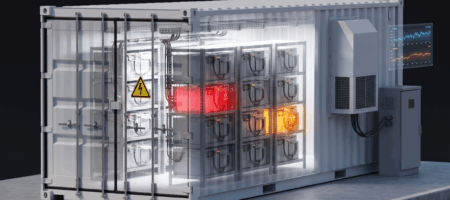
Image source: Sustainable Bus
March 6, 2026 //
Blog // EN
The Battery Cycle: Shedding Light on Batteries through a Series of Knowledge Articles [2025 RELEASE]
The “Battery Cycle” is a series of articles for everyone in electric mobility, explaining how lithium-ion batteries work.
Claudius Jehle, CEO of volytica diagnostics, wrote the series for Sustainable Bus in 2021. Now we have updated the articles with field data and the lessons we have learned, ensuring they reflect the actual behavior of batteries in daily operation. Get the revised e-paper on Yumpu.
If you have any questions or would like to contribute, please email us at marketing@volytica.com.
Opening the Black Box Battery
The battery is the last relevant remaining wearing part of an electric vehicle – and by far the most expensive. Apart from tires and wipers, there’s no oil change, no complex exhaust system and even braking is largely done by the engine itself, sparing the mechanical brakes.
Together with modest electricity prices, battery-electric transport should thus in principle be a care-free, straightforward and especially economical alternative to our well-known ICE vehicles. However, in practice there are several challenges, sometimes bad media coverage and especially a huge information asymmetry around this complex component onto which we put so much focus and hope.
Reason enough to take a closer look and debunk some myths of this delicate black box.
Battery Analytics in 2025 – More Relevant Than Ever
In less than four years, the European e-bus market has experienced significant growth. Currently, battery-electric buses account for 46% of new city bus registrations in the EU. In countries such as Norway, Slovenia, Denmark, and the Netherlands, the share of zero-emission buses has reached 100%.
With dozens of manufacturers (OEMs), both legacy and evolving battery chemistries like lithium iron phosphate (LFP) and nickel cobalt aluminum oxide (NCA), and growing regulatory pressure, the battery has transitioned from a mysterious component to a mission-critical one. Although it remains the most expensive and sensitive component of the vehicle, the battery now plays a strategic role in safety, lifetime planning, and residual value.
In this updated series, we revisit key battery topics and shed light on what has changed — and what still needs to change — as e-bus fleets mature.
Debunking Battery Cycle Myths (2021 vs. 2025)
In our original 2021 article, we aimed to demystify the battery – highlighting myths and misunderstandings. Here’s how these myths hold up in 2025:
Hands-on Tip #1: Have a Battery Passport
Start building your “battery passport” today – even before it’s mandatory. Assign unique IDs, collect key metrics like SoH, charging behavior and temperature profiles, and document anomalies. Include these requirements in your tenders: it supports resale value, warranty negotiations, and future compliance.
Unsure which KPIs matter most? Contact volytica to define them for your use case.
Sources:
*1: https://www.transportenvironment.org/articles/half-of-new-eu-city-buses-were-zero-emission-in-2024
*2: https://www.sustainable-bus.com/news/27-europe-cities-target-zero-emission-bus-fleet-2030/
Looking Ahead in the Series
In the coming articles, we’ll dive deeper into topics including battery chemistries, SoC accuracy, degradation, balancing, second-life value and more — always with hands-on operator value and the entire battery cycle in mind.
All knowledge articles of the battery cycle:
Intro – The Battery Cycle – opening the black box
1 – NMC, LFP, LTO: What’s the Difference in Battery Chemistry? – energy density, safety, lifetime, cost
2 – State of Charge: Why It’s Harder to Measure Than You Think – about really knowing how full your battery is
3 – Fast Charging Explained: Why More Power Doesn’t Mean Less Time – how to keep a battery healthy
4 – Why an LFP Bus Can Suddenly Stop: The Battery’s Weakest Cell – why imbalances define the limit
5 – Battery SoH: The Number That Doesn’t Tell the Whole Story – State of Health is mostly misunderstood
6 – Stress Level: The Key Drivers of Battery Degradation – what really hurts a battery
7 – Battery Data: Are You Seeing the Full Picture? – use and interpret your data correctly